
~ “ Empowering Women and Building Hope ”– An Interview with Hilda Viderø ~
I met Hilda during the IFnC (the Coaching branch of IFnT) training, and from the very first moment, I was fascinated by her presence, her profound wisdom, and her steadfast faith.
Hilda comes from the Faroe Islands and has been serving as a missionary in Africa alongside her husband, Johannes, for decades. Whether establishing workshops for people with disabilities in Botswana, standing in the midst of the pain of the HIV crisis, or now helping to build a trade school for women and primary schools in the remote bush of Liberia, Hilda shows us what it looks like to say “yes” to God not just with words, but with your whole life.
It is an honour to share a little glimpse into her rich and moving life with you.
Dear Hilda, would you like to start by briefly introducing yourself?
Yes, I’d love to! My name is Hilda Viderø, and I come from the Faroe Islands. I was born and raised in the small village of Klaksvík, the middle child of five siblings.
I’m married to Johannes, and we have two sons. In 1984, we travelled to Liberia together as missionaries. Our eldest son was just two months old at the time, and our second son was born there.
My professional training includes social diaconal work, psychiatric nursing, psychotherapy, and family therapy. But you know, the older you get, the more you realise just how much there is still to learn! I’m happy about that because I never feel as though I’ve reached the point where I know everything. I can keep being curious and moving forward.
Staying curious and moving forward – that sounds wonderful! What inspired you to go to Africa in the first place?
A lot of it has to do with my roots. My mother was a nurse, and my father worked as a secretary for the YMCA (https://www.ymcaeurope.com). We lived in a flat in the YMCA building, and missionaries from India and Africa were constantly visiting us – mostly Danish missionaries who shared stories about their work.
My personal calling began with a dream. One night, I dreamt that I was sitting among African children. That dream stayed with me and never let go. It shaped my path: I wanted to become a nurse and social worker and go to Africa.
When I met Johannes, I told him straight away, “I can’t marry you because I’m going to Africa!” He laughed and told me that he, too, already had a desire in his heart to go to Nepal or India. In the end, God brought our paths together, and in 1984, we set off for Liberia as a couple.
You then spent many years working in Botswana, during a particularly difficult period in history. What was that time like for you?
In Botswana, we worked in the Okavango Delta at a centre for people with disabilities. Every two weeks, Johannes travelled by tent to remote villages to find people who had never seen a doctor and bring them to us. We offered physiotherapy and established a workshop where adults could learn practical skills such as sewing, weaving, and leatherwork, enabling them to earn their own living. Teaching them that each life has value and how to handle taking care of people with disabilities was also central to our work.
Then, in the late 1980s and throughout the 1990s, the HIV/AIDS epidemic hit us with devastating force. There was no medication available at the time, and the disease was surrounded by an enormous silence. The suffering and grief were indescribable. On some Saturdays, we stood before fourteen open graves in the cemetery – graves filled with young people and children.
We couldn’t simply stand by and let the suffering pass us by. Together with women from the church, we began visiting the hospital to sing and pray with the sick, and to care for those who were dying in their homes. Out of this desperate need, Tsholofelo – meaning “hope” – and the organisation Women Against Rape (WAR) were born. WAR continues to protect women from violence up to this day.
Later, you returned to the Faroe Islands, but your heart continued to burn for Africa. In 2018, you founded your own organisation, “Mirjam”. What lies behind this vision?
I didn’t want to bring women second-hand clothes. That often takes away their dignity and undermines the local economy. I wanted to give them genuine freedom.
When I think of freedom, I think of spiritual, economic, and social freedom
– of breaking the chains that hold women back so they can step into their calling with joy and dance.
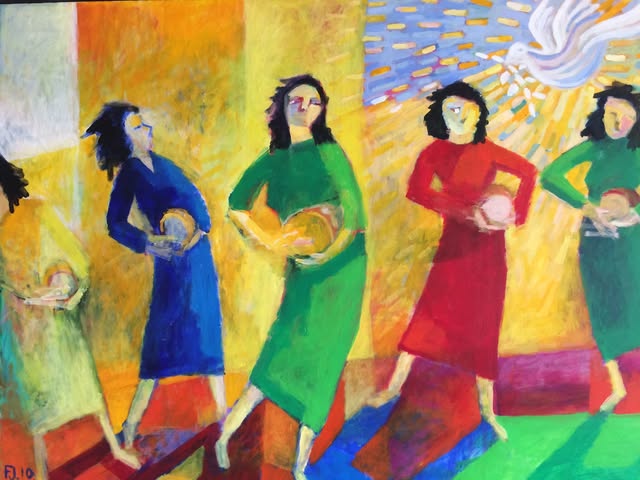
The name Mirjam comes from Miriam in the Bible, who led the women with a tambourine, dancing after the Israelites had been rescued at the Red Sea.
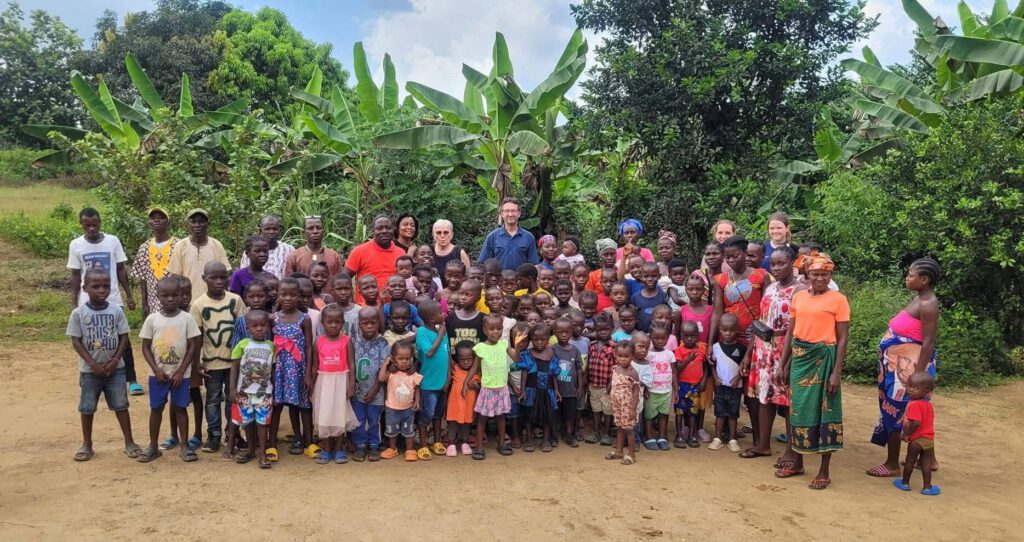
Today, we run our own trade school in Liberia, with 55 female students. We will soon open a bigger school, where we can take up to 100 students. They spend a year learning trades such as tailoring, beauty therapy, catering, soap-making, and fabric dyeing. But we don’t just teach them practical skills; we also teach them how to run a business.
And the best part? When they graduate, we provide each of them with her own start-up kit – such as a sewing machine or ovens – so that they can immediately begin supporting themselves.
We are also building schools in remote rural areas for children who would otherwise have to walk for hours through the rainforest to get to school. In Henry Jamestown, we built a school for 80 children together with the local villagers, complete with a well and proper sanitation facilities. It is deeply moving to see how much dignity and joy this brings!
Just like me, you completed the IFnT training. How has this approach changed the way you work and live in Africa?
Oh, IFnT has profoundly shaped the way I work and live! It has become an inner attitude, a way of being.
- From Fixed Point Living to Emergent Living: In the past, I often kept fighting until I was completely exhausted. I’ve learned that we can have a goal without rushing to reach it. We are allowed to take our time and conserve our energy.
- Working together instead of top-down: In many African contexts, the word of the tribal leader, or chief, carries great authority. Together with my teachers, I introduced brainstorming. Giving everyone a voice and making decisions together has helped people experience genuine dignity.
- Living with a C.L.O.A.K. Attitude and Using “Clean Language”: Cultural differences can easily lead to misunderstandings. Through clear and compassionate communication, we address things directly and clarify them. At our schools, we don’t shout at one another – we treat each other as equals.
- Self-care and boundaries: With my ADHD, I constantly have a thousand ideas running through my head. IFnT has helped me slow down, focus, and establish healthy boundaries. Today, I take good care of myself – I go swimming for example and regularly recharge my own batteries – so that I can continue serving others in the long term.
~ What We Can Learn from Hilda ~
Hilda’s story touches me deeply. It reminds me of a few precious truths that I would love to share with you for your own everyday life:
- Your calling is a process. You don’t have to reach your destination today. Give yourself time, manage your energy wisely, and allow yourself to grow one step at a time.
- Genuine help restores dignity. Helping others doesn’t mean making them dependent on you. It means giving them the tools they need to discover and develop the dignity God has given them.
- Flourishing begins with you. You can only pour out what your cup contains. Self-care and healthy boundaries are not selfish; they are essential if you want to be a source of blessing to others.
How You Can Support the Work of “Mirjam”
If this story has touched your heart and you would like to support Hilda’s work in Liberia, there are some wonderful ways you can get involved:
- School sponsorships: Help a child attend school by contributing towards uniforms, school fees, and education.
- Start-up kits for women: Fund a sewing machine or the basic equipment a vocational school graduate needs to get started.
- Construction projects: Help build wells, playgrounds, and classrooms in remote rural communities.
- Account: 9865-3124724 Swift code: NOYAFO21 and IBAN: FO8598650003124724
(small tip – some bank apps in the EU do not support this IBAN – it will work on the website on your computer)
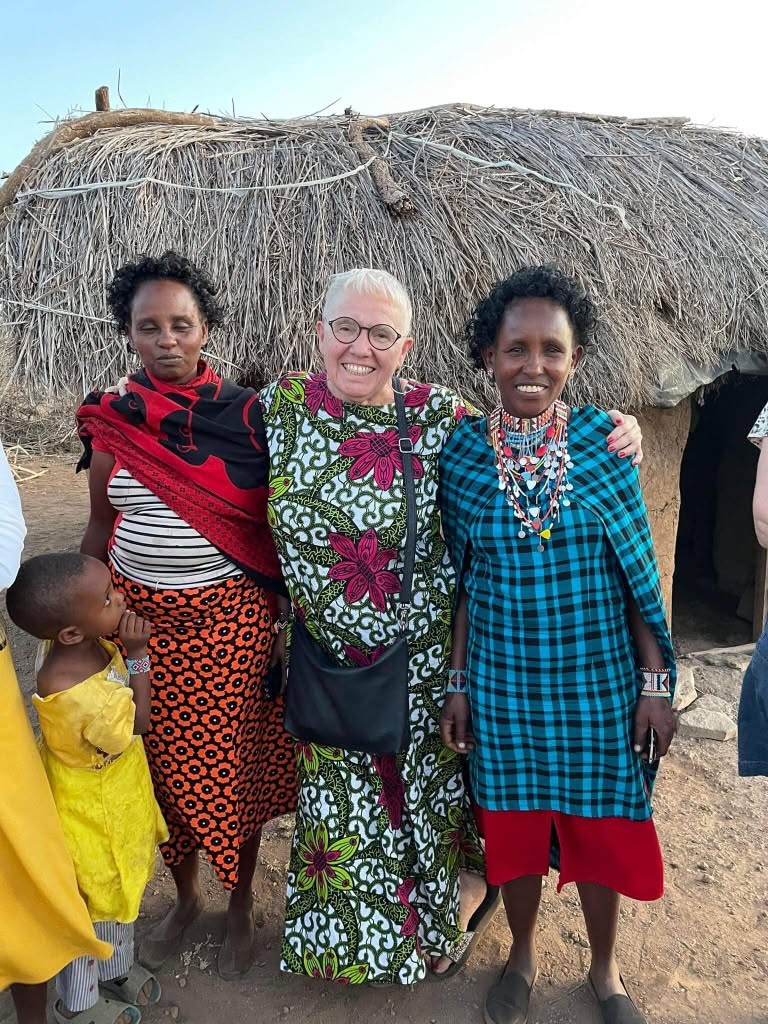
Hilda told me: „I always make the experience that people love helping. You know, people really want to help!“. There is a lot of darkness in this world and there is also a lot of light in this world if I am willing to look for it. This really gives me hope for humanity. I am so grateful for women like Hilda, who move through this world carrying the light of God!
Feel free to visit her website to learn more, or leave me a comment: What touched your heart most about Hilda’s story today?
With love,
Franzi
#vision #mission #africa #life #calling #missionary #helping #empowering #humanity #god #love #kindness #ifnt #c.l.o.a.k. #emergentliving #smallstepps #together #inspiration #hope #stories #people #heart #give
>>German Version <<
Sources: Pictures from Facebook Page of Mirjam (https://www.facebook.com/groups/540275536326187, 20.10.2026, 19:11)


